

For welders in Pakistan who are aiming to work in Europe, the biggest challenge is not finding opportunities it is meeting the technical standards required by international employers. Many welders believe that years of local experience are enough, but when they appear for trade tests, they struggle. The reason is simple: European industries demand precision, consistency, and proper technique, not just experience.
This is where welding skills for Europe become critical. If your goal is to secure a stable and high-paying job abroad, you must upgrade your skills according to international requirements. At Tech Mech Technical Center, Sadiqabad, the focus is not just on teaching welding, but on preparing welders for real industrial jobs in Europe.
Understanding Welding Jobs in Europe
Welding in Europe is a highly technical profession. It is not limited to basic joining of metals; instead, it involves working under strict engineering standards and quality controls. Countries like Poland, Romania, and Germany have a strong demand for welders in sectors such as manufacturing, construction, shipbuilding, and heavy engineering.
When a welder is hired in Europe, the expectation is that he can work independently, understand technical drawings, and produce clean, defect-free welds. The work environment is structured, and every weld is often inspected. This is very different from local workshops where speed is sometimes prioritized over quality.
Most commonly, welders are employed in steel fabrication units where large structures like beams, frames, and industrial components are manufactured. Others work in automotive industries, welding machine parts and components with high precision. Some welders are also involved in pipeline and pressure vessel work, where the quality requirements are even stricter because safety is involved.
The Reality: Why Welders Fail Abroad
A hard truth that many welders face is rejection during trade tests. Even experienced welders with 5–10 years of work often fail. This does not mean they are not skilled it means they are not trained according to international standards.
One of the main issues is improper technique. For example, a welder might be able to join metal pieces, but the bead may not have proper penetration or uniformity. In Europe, even small defects such as porosity, undercut, or uneven beads can lead to rejection.
Another major problem is the lack of understanding of welding positions. Many local welders are comfortable working in flat positions, but European tests require vertical and overhead welding. Without practice, it becomes very difficult to control the weld pool in these positions.
Additionally, most welders are not familiar with technical drawings. In Europe, you cannot rely on instructions alone you must read blueprints and follow exact measurements and symbols. This gap in knowledge becomes a major barrier.
Why Welding Skills for Europe Require Proper Training?
To succeed internationally, welding must be treated as a technical skill, not just a manual job. Proper training ensures that you are not only working hard but also working correctly.
Training helps you understand the science behind welding, such as heat control, metal behavior, and gas shielding. It also improves your hand control, which is essential for producing clean and consistent welds.
More importantly, training prepares you for real job conditions. Instead of practicing randomly, you work on tasks that simulate actual industrial requirements. This includes working with test plates, following time limits, and meeting quality standards.
Without structured training, even a skilled welder may struggle to adapt to international work environments.
Training Approach at Tech Mech Technical Center, Sadiqabad
At Tech Mech Technical Center, the goal is clear: to develop job-ready welders who can pass international trade tests and perform confidently in Europe.
The training is designed to be practical and industry-focused. Instead of spending too much time on theory, welders are given hands-on experience from the beginning. You work directly with welding machines, materials, and tools that reflect real job conditions.
A major focus is placed on MIG/MAG welding, which is the most demanded process in Europe. Trainees learn how to control voltage, wire feed speed, and gas flow to achieve proper weld quality. They also practice different joint types and positions, ensuring they are comfortable in all situations.
In addition to MIG welding, basic TIG and stick welding techniques are also introduced. This gives welders a broader skill set, which increases their chances of selection.
Importance of Welding Positions and Control
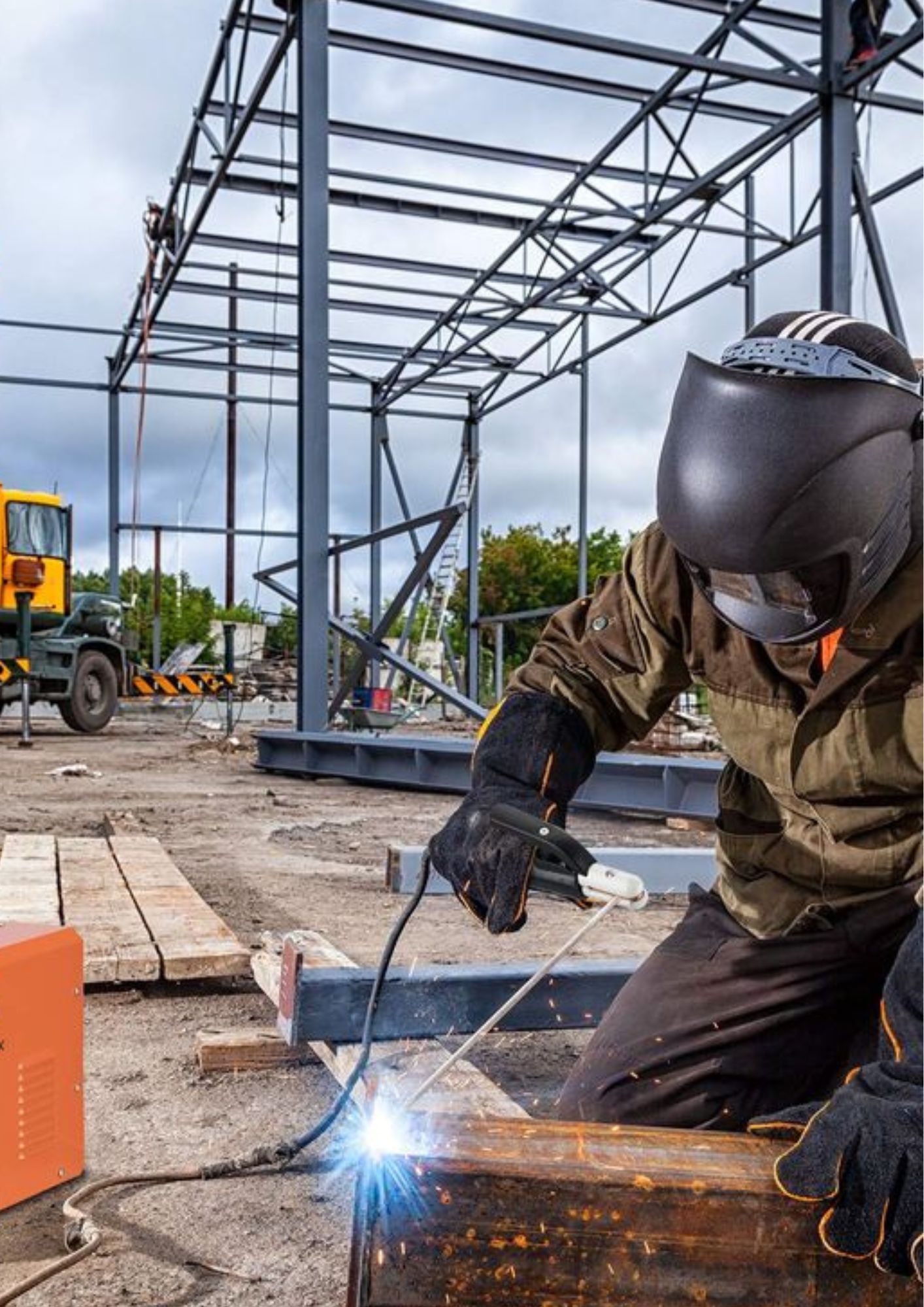
One of the key areas where training makes a difference is welding positions. In Europe, it is not enough to weld in a flat position. You must be able to perform in vertical and overhead positions with the same level of quality.
This requires strong hand control and understanding of weld pool behavior. For example, in vertical welding, you must control the flow of molten metal so it does not drop. In overhead welding, you must maintain consistency while working against gravity.
At Tech Mech, welders practice these positions repeatedly until they develop confidence and control. This is one of the biggest advantages of professional training.
Blueprint Reading and Technical Understanding
Another critical skill for European jobs is blueprint reading. Many welders ignore this aspect, but it is essential for success.
Technical drawings provide all the information about the job, including dimensions, joint types, and welding symbols. If you cannot read these drawings, you cannot perform the job correctly.
Training includes basic drawing interpretation so welders can understand instructions without relying on others. This not only improves job performance but also increases your value as a worker.
Safety and Work Discipline
European industries follow strict safety standards, and welders are expected to follow them at all times. This includes wearing proper protective equipment, maintaining a clean work area, and handling tools responsibly.
Safety is not just about avoiding accidents it is part of professional discipline. Employers prefer workers who follow rules and maintain consistency.
At Tech Mech Technical Center, safety practices are integrated into training so welders develop good habits from the beginning.
Career Opportunities After Training
Once you upgrade your welding skills for Europe, your career opportunities expand significantly. You are no longer limited to local jobs; you can apply for positions in multiple countries.
With experience, welders can move into higher roles such as senior welder, supervisor, or even inspector. Some also start their own fabrication work after gaining international exposure.
The financial benefits are also substantial. Salaries in Europe are much higher than in Pakistan, and with overtime, welders can earn a stable income and support their families.
Why Tech Mech Technical Center is the Right Choice?
Choosing the right training center is crucial. Many institutes offer basic welding courses, but very few focus on international job preparation.
Tech Mech Technical Center, Sadiqabad stands out because it focuses on practical skills, real job scenarios, and trade test preparation. The training is designed to make you confident and capable, not just certified.
The environment encourages learning through practice, and welders are guided step by step to improve their technique. This structured approach makes a significant difference in results.
Are you ready to take your welding career beyond local limits and work in Europe?
Upgrade your skills today at Tech Mech Technical Center, Sadiqabad, and prepare yourself for real international opportunities.
Frequently Asked Questions (FAQs)
1. What are welding skills for Europe?
These are advanced welding techniques and standards required by European employers, including MIG welding, position welding, and blueprint reading.
2. Do I need experience to join training?
No, beginners can join, but experienced welders can upgrade their skills more quickly.
3. Which welding process is most important?
MIG/MAG welding is the most in-demand process for European jobs.
4. Can training help me pass trade tests?
Yes, proper training significantly increases your chances of passing employer tests.
5. Is Europe a good option for welders?
Yes, there is strong demand, better salaries, and long-term career growth.