

In today’s industrial world, machinery is the backbone of production. From manufacturing plants to large-scale construction projects, everything depends on properly installed and maintained equipment. However, machines are only as efficient as the technicians who handle them. This is where the role of a millwright becomes critical.
A millwright course is not just a basic mechanical program it is advanced industrial training designed to prepare individuals for real-world challenges in installation, maintenance, and troubleshooting of heavy machinery. For those looking to build a strong technical career, especially in international markets, becoming a trained millwright can open doors to stable, high-paying opportunities.
Understanding the Role of a Millwright
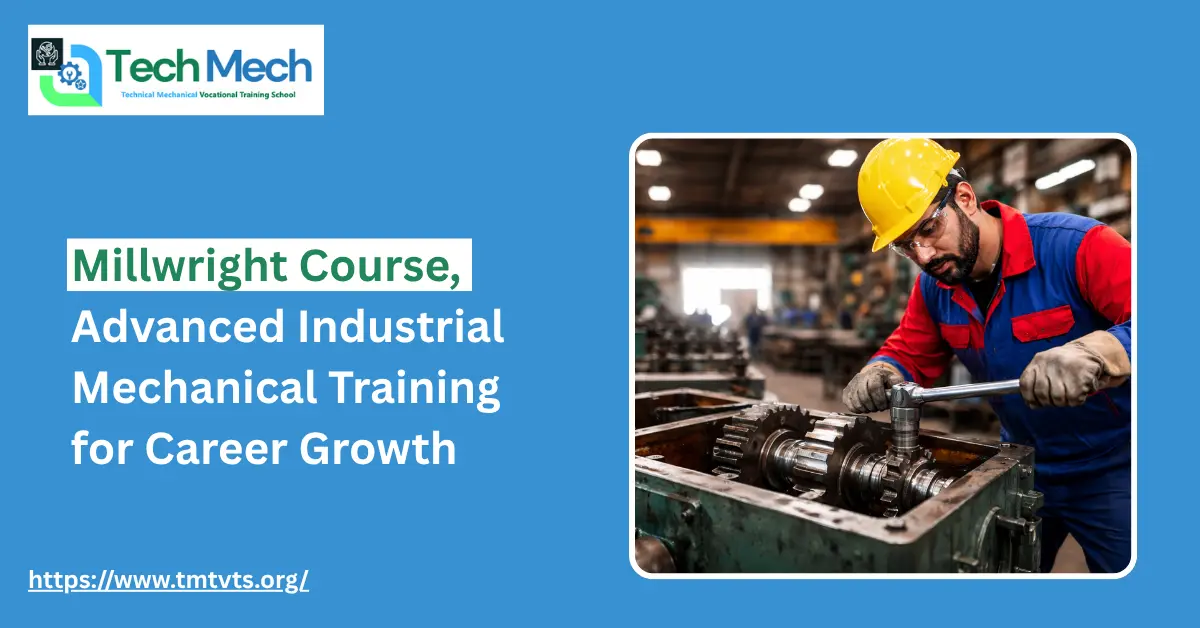
A millwright is a highly skilled industrial mechanic responsible for assembling, installing, aligning, and maintaining machinery in factories and production facilities. Unlike general mechanics, millwrights work with precision equipment where even a small misalignment can cause major operational failures.
In industrial environments, millwrights are involved in setting up machines such as conveyor systems, turbines, pumps, compressors, and production lines. They ensure that all components are properly aligned and functioning efficiently. Their work requires a combination of mechanical knowledge, measurement accuracy, and practical experience.
The job is not limited to installation. Maintenance is a major part of the role. Machines undergo wear and tear, and it is the responsibility of the millwright to identify issues before they become serious problems.
This includes checking bearings, lubrication systems, shafts, and couplings, as well as replacing damaged parts when necessary.
Why the Demand for Millwrights is Growing?
Industrial growth across the world has increased the demand for skilled technical workers. Countries in Europe, the Middle East, and even local industries are continuously expanding their production capabilities. However, there is a shortage of trained professionals who can handle advanced machinery.
This demand has made the millwright course one of the most valuable technical training programs today. Industries prefer trained individuals who understand both theoretical concepts and practical applications. Employers are no longer satisfied with basic mechanical knowledge they want professionals who can work independently and solve problems efficiently.
Another reason for high demand is automation. Modern industries are using advanced machines that require precise installation and maintenance. A small error can lead to production loss, which makes skilled millwrights extremely valuable.
What You Learn in a Millwright Course?
A properly designed millwright course focuses on both fundamentals and advanced skills. The training is structured to ensure that students develop a deep understanding of industrial machinery.
At the core of the course is mechanical assembly and disassembly. Students learn how different machine components fit together and how to handle them safely. This includes working with shafts, gears, bearings, and couplings.
Alignment is one of the most critical skills taught during training. Machines must be aligned with high precision to avoid vibration and damage. Trainees learn techniques such as dial gauge alignment and laser alignment, which are widely used in industries.
Another important area is equipment installation. This involves reading technical drawings, positioning machinery, and ensuring proper leveling and anchoring. Without correct installation, even the best machines cannot perform efficiently.
Maintenance and troubleshooting are also key parts of the course. Students are trained to identify faults, analyze problems, and implement solutions. This includes understanding lubrication systems, vibration analysis, and wear patterns.
Practical Training and Hands-On Experience
One of the biggest differences between basic training and a professional millwright course is the focus on practical learning. Industrial skills cannot be developed through theory alone. Hands-on experience is essential.
During training, students work on real or simulated machinery. They practice assembling and disassembling components, aligning shafts, and performing maintenance tasks. This practical exposure helps them build confidence and develop problem-solving skills.
Training centers that focus on job readiness ensure that students are exposed to real industrial scenarios. This includes time-based tasks, troubleshooting exercises, and working under supervision. By the end of the course, trainees are not just learners—they are capable technicians.
Importance of Technical Drawings and Measurements
In industrial work, precision is everything. A millwright must be able to read and interpret technical drawings accurately. These drawings provide detailed information about machine components, dimensions, and assembly instructions.
Without this skill, it is impossible to perform installation or maintenance correctly. Even a small mistake in measurement can lead to serious issues such as misalignment or equipment failure.
The millwright course includes training on engineering drawings and measurement tools. Students learn how to use instruments such as vernier calipers, micrometers, and dial indicators. This knowledge ensures that they can work with accuracy and confidence.
Safety and Work Discipline
Industrial environments can be hazardous if proper safety measures are not followed. Millwrights work with heavy machinery, rotating parts, and high-pressure systems, which makes safety training essential.
A professional course emphasizes the importance of personal protective equipment, safe handling of tools, and adherence to safety protocols. Students are trained to identify risks and take preventive measures.
Work discipline is equally important. Industries value technicians who are reliable, punctual, and consistent in their performance. Training helps develop these qualities, which are essential for long-term career growth.
Key Course Duration Types:
Our millwright course is primarily designed as a 3-month complete training program to fully develop and upgrade your industrial skills according to international standards.
For those who already have basic knowledge or experience, we also offer a 15-day short course to refine techniques, improve precision, and prepare for real job requirements.
We keep our training fees affordable, and for outstation students, food and accommodation facilities are also available to ensure a comfortable learning environment.
Career Opportunities After Completing a Millwright Course
Completing a millwright course opens up a wide range of career opportunities. Graduates can work in various industries, including manufacturing, construction, power plants, and oil and gas sectors.
Initially, individuals may start as junior technicians or assistants. With experience, they can progress to senior millwright positions, supervisors, or maintenance engineers. Some may also specialize in specific areas such as alignment or vibration analysis.
For those interested in working abroad, the demand for millwrights is particularly high in Europe and the Middle East. These regions offer better salaries and working conditions, making them attractive options for skilled workers.
Financial and Career Growth Potential
One of the main reasons people choose technical training is financial stability. Skilled millwrights are well-paid compared to unskilled labor. As experience increases, so does earning potential.
In international markets, salaries are significantly higher, and additional benefits such as accommodation and overtime are often provided. This allows individuals to support their families and build a secure future.
Career growth is also promising. With continuous learning and experience, millwrights can move into specialized roles or management positions. Some even start their own businesses after gaining enough expertise.
Why Professional Training Matters?
Many individuals attempt to learn skills informally, but this approach has limitations. Without proper guidance, it is difficult to achieve the level of precision required in industrial work.
A structured millwright course provides a clear learning path. It ensures that students understand concepts step by step and gain practical experience. Training also helps in building confidence, which is essential when working with complex machinery.
Employers prefer candidates who have completed professional training because it reduces the need for additional supervision. A trained millwright can start contributing to the job immediately.
Who Should Enroll in a Millwright Course?
This course is suitable for a wide range of individuals. Beginners who want to enter the technical field can start their careers through this program. It provides a strong foundation and opens up multiple opportunities.
Experienced mechanics who want to upgrade their skills can also benefit from the course. It helps them transition from basic work to advanced industrial roles.
Even those who have faced difficulties in securing jobs can improve their prospects by gaining specialized skills. Technical training increases employability and provides a competitive advantage.
Are you ready to build a strong technical career and work with advanced industrial machinery?
Enroll in a professional millwright course at TMTVTS today and take the first step toward long-term career growth and international opportunities.
Frequently Asked Questions (FAQs)
What qualifications do I need to become a millwright?
You need basic education and hands-on training through a certified millwright course.
How much does a millwright earn per hour and monthly?
Millwrights earn around €8–€20 per hour and €1,000–€3,000 per month depending on experience.
What is the highest salary a millwright can earn internationally?
Top millwrights can earn over €3,500 per month in advanced industrial roles.
Is millwright a high-demand skill in Europe and the Middle East?
Yes, millwrights are in high demand due to industrial growth and skilled labor shortages.
Can a millwright also work as an electrician or in related trades?
A millwright can work in related roles but needs additional training to become a qualified electrician.
How much math and technical knowledge is required in a millwright course?
Basic to moderate math and practical technical knowledge are required for machine alignment and measurements.
Is millwright work physically demanding or difficult to learn?
It is physically demanding but can be learned easily with proper training and practice.
What skills are taught in a professional millwright course?
It covers machine installation, alignment, maintenance, troubleshooting, and blueprint reading.
What industries hire trained millwrights the most?
Manufacturing, construction, power plants, and oil & gas industries hire millwrights the most.
How can a millwright course help in getting overseas jobs?
It makes you job-ready and increases your chances of passing international trade tests.