

If you are a skilled welder in Pakistan seeking international employment, MIG welding jobs in Poland for Pakistanis present a strong and practical career opportunity. With Poland’s manufacturing, construction, and heavy engineering sectors expanding, the demand for qualified welders continues to rise. This growing industrial activity has created a consistent shortage of skilled manpower, opening doors for foreign workers, particularly from South Asian countries like Pakistan.
Poland’s welding industry places high importance on precision, safety standards, and certified skills. Employers actively seek MIG welders who can work with modern fabrication systems, understand technical drawings, and maintain European quality standards. For Pakistani welders with experience and basic certifications, this market offers stable employment and competitive benefits compared to regional opportunities.
This article provides a clear and technical overview of MIG welding job requirements in Poland, including industry expectations, hiring processes, working conditions, and how proper skill development can significantly improve selection chances and long-term career growth abroad.
Understanding MIG Welding Jobs in Poland
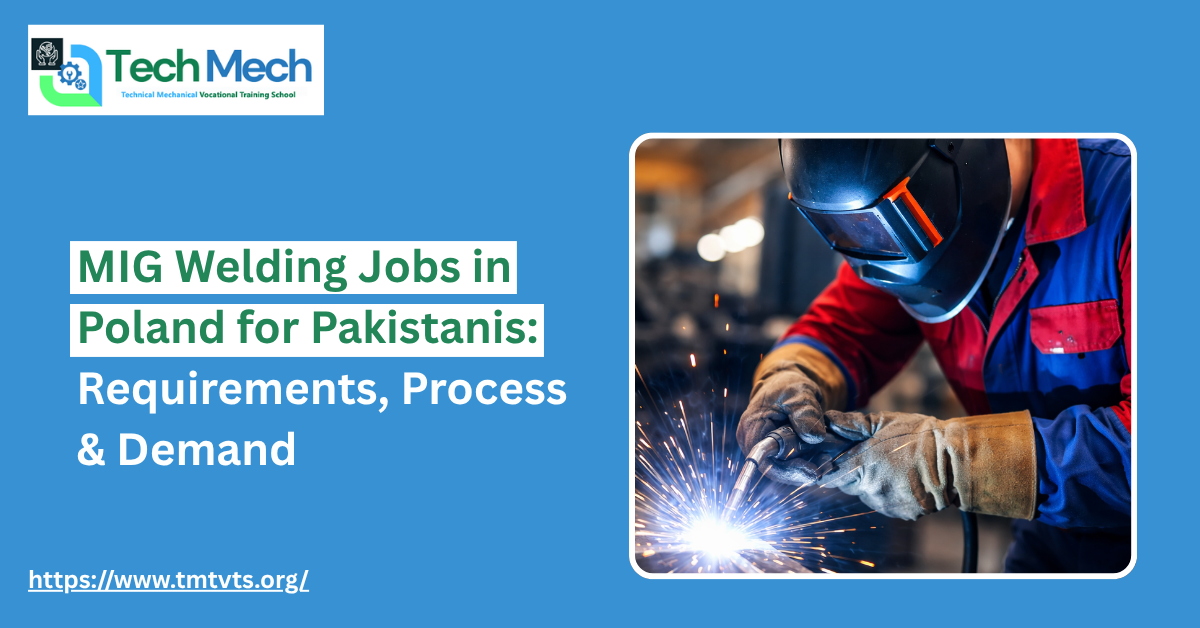
MIG welding (Metal Inert Gas welding), also known as GMAW (Gas Metal Arc Welding), is widely used in Poland’s manufacturing, automotive, and construction industries.
What Kind of Work You Will Do?
In Poland, MIG welders are typically employed in:
- Steel structure fabrication (bridges, warehouses, industrial sheds)
- Automotive parts manufacturing
- Shipbuilding and heavy machinery
- Pipe welding and industrial installations
Daily Job Responsibilities
A MIG welder in Poland is expected to:
- Read and interpret technical drawings (blueprints)
- Perform welding using MIG/MAG machines
- Maintain proper weld quality and penetration
- Use shielding gases like CO₂ or Argon mixtures
- Inspect welds for defects (porosity, cracks, undercut)
- Follow strict European safety standards
Polish employers prioritize precision, consistency, and speed.
Why Poland Needs MIG Welders?
Poland is part of the European Union and has seen massive growth in:
- Infrastructure projects
- Manufacturing exports
- Industrial production
However, the local workforce shortage has pushed companies to hire foreign workers.
Key Reasons for Demand
- Aging local workforce
- Expansion of factories and construction projects
- Increasing exports to EU countries
- High demand for certified welders
This is why MIG welding jobs in Poland for Pakistanis are increasing every year.
Salary and Benefits
Average Salary
- Entry-level: €800 – €1,200 per month
- Experienced welders: €1,200 – €1,800 per month
- Overtime available (paid separately)
Additional Benefits
- Accommodation often provided or subsidized
- Transport arrangements by employer
- Health insurance (mandatory in Poland)
- Legal work permit and contract
Compared to Pakistan, this income is significantly higher, especially when overtime is included.
Weather Conditions in Poland (Important for Welders)
Before applying, it is critical to understand the weather because it directly affects your work.
Winter (November to March)
- Temperature: -5°C to -15°C
- Snowfall common
- Outdoor welding becomes difficult
- Requires thermal clothing and safety gear
Summer (June to August)
- Temperature: 20°C to 30°C
- Comfortable for work
- Longer working hours possible
Impact on Welding Work
- Cold weather affects metal contraction and weld quality
- Welders must adjust parameters accordingly
- PPE (Personal Protective Equipment) is essential
If you are not prepared for cold weather, it can be challenging initially.
Requirements for MIG Welding Jobs in Poland
To secure a job, you must meet certain technical and professional criteria.
1. Technical Skills
You must have hands-on experience in:
- MIG/MAG welding techniques
- Working with mild steel and stainless steel
- Different welding positions (flat, vertical, overhead)
- Using welding machines and tools
2. Certification
Most employers prefer:
- Welding certification (local or international)
- Ability to pass a practical welding test
3. Experience
- Minimum 1–2 years of practical experience
- Fresh welders may struggle without proper training
4. Basic English
- Not mandatory but highly recommended
- Helps in understanding instructions and safety rules
5. Physical Fitness
- Welding requires stamina and precision
- Long working hours (8–12 hours shifts)
Step-by-Step Process to Apply
Here is the practical process for Pakistani welders:
Step 1: Skill Preparation
- Learn MIG welding properly
- Practice on real industrial tasks
- Understand welding symbols and drawings
Step 2: Training and Testing
- Join a technical training center
- Get evaluated through mock welding tests
Step 3: Job Offer
- Apply through a licensed recruitment agency
- Attend trade tests conducted by employers
Step 4: Work Permit
- Employer applies for Polish work permit
- Processing time: 4–8 weeks
Step 5: Visa Application
- Submit documents to embassy
- Attend interview if required
Step 6: Travel and Employment
- Fly to Poland
- Start work under contract
Common Challenges Pakistani Welders Face
Many candidates fail due to avoidable mistakes:
- Lack of proper MIG welding practice
- No understanding of welding drawings
- Poor weld finishing
- No knowledge of European standards
- Overconfidence without real skills
This is why training is critical before applying.
Importance of Professional Training
If you want to succeed in MIG welding jobs in Poland for Pakistanis, training is not optional it is essential.
What Proper Training Should Include?
A good technical training center should provide:
- Hands-on MIG welding practice
- Training on welding positions (1G, 2G, 3G, 4G)
- Real job simulation tasks
- Blueprint reading skills
- Safety procedures
- Mock trade tests
Why Training Matters?
- Increases chances of passing employer tests
- Builds confidence
- Reduces rejection risk
- Helps you earn higher salary
Without training, even experienced welders may fail international standards.
Your Opportunity as a Training Center
If you are running a technical training center, this is a strong opportunity.
How You Can Help Welders?
- Offer job-oriented MIG welding courses
- Focus on international standards
- Conduct trade test preparation
- Provide guidance on overseas jobs
- Build partnerships with recruiters
Market Demand
There is a huge gap between:
- Welders in Pakistan
- Industry-ready welders for Europe
You can position your training center as a bridge between skill and international employment.
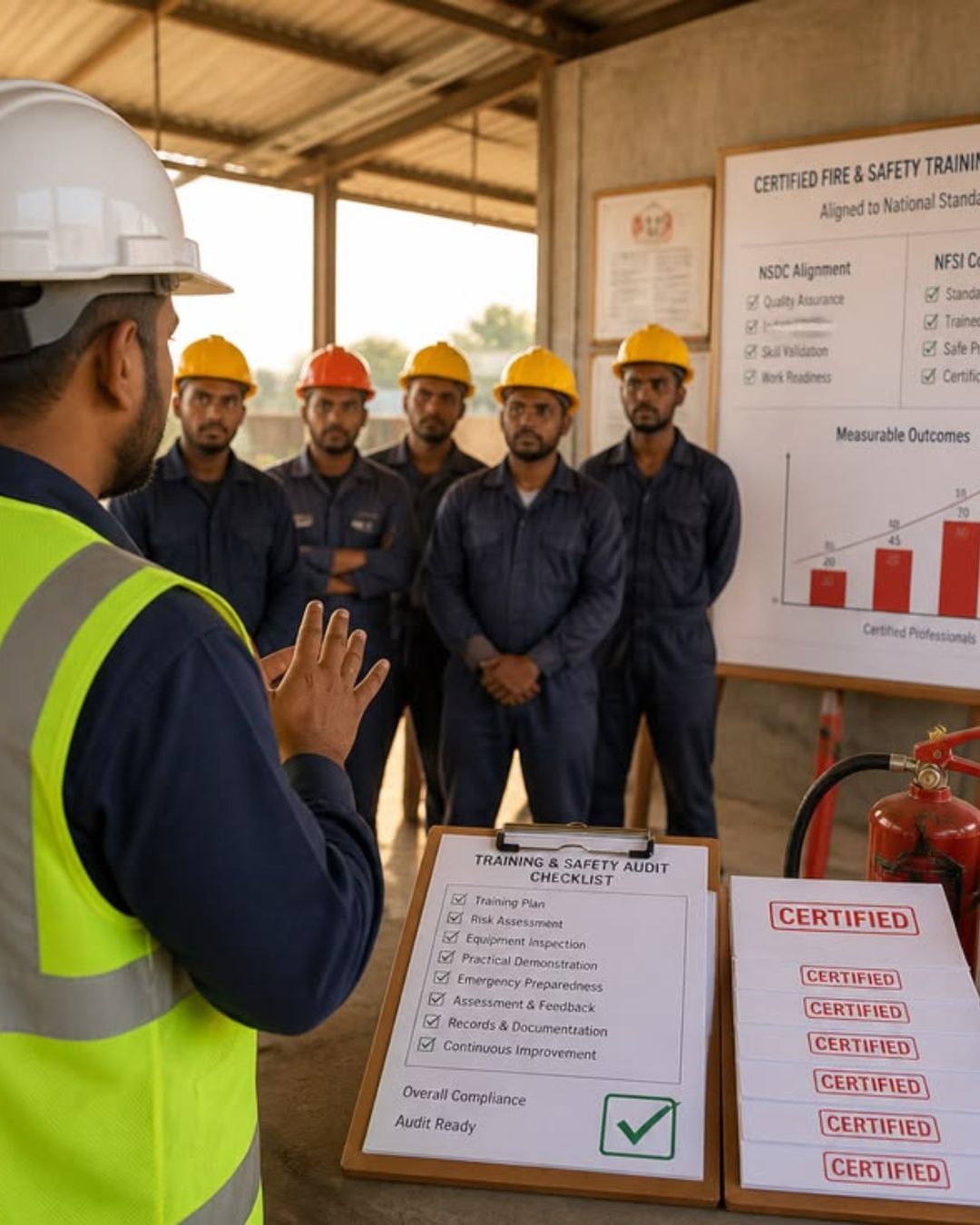
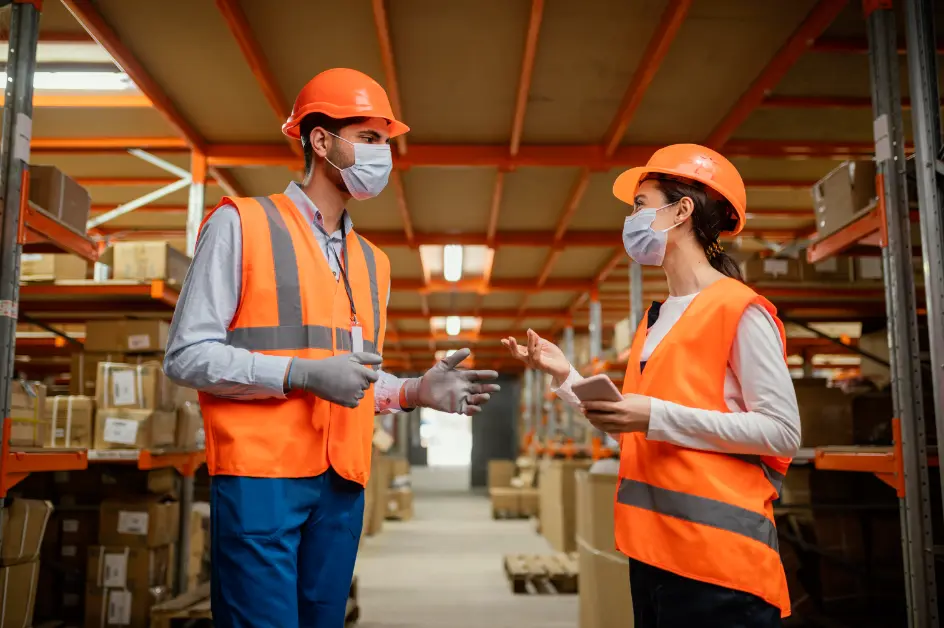
Safety Standards in Poland
Polish companies follow strict EU safety regulations.
Mandatory Safety Practices
- Use of welding helmet and gloves
- Fire-resistant clothing
- Ventilation systems
- Proper grounding of machines
Failure to follow safety rules can lead to job termination.
Future Demand Outlook
The demand for MIG welders in Poland is expected to grow due to:
- Ongoing industrial expansion
- EU infrastructure funding
- Skilled labor shortage
This means long-term opportunities for trained Pakistani welders.
Ready to take your welding career to Europe?
Upgrade your MIG welding skills and training at TMTVTS to meet international standards. Proper preparation is the key to securing stable overseas opportunities and building a better future abroad.
Frequently Asked Questions (FAQs)
1. What is the salary of a MIG welder in Poland?
Salary ranges from €800 to €1,800 depending on experience and overtime.
2. Do I need certification for MIG welding jobs in Poland?
Yes, most employers require practical skills and prefer certified welders.
3. Is English necessary?
Basic English is helpful but not always mandatory.
4. How long does the visa process take?
Usually 4 to 8 months after receiving a job offer.
5. Can beginners apply?
Beginners can apply, but proper training is highly recommended to pass trade tests.
6. Is Poland safe for Pakistani workers?
Yes, Poland is generally safe, and many Pakistani workers are already employed there.