
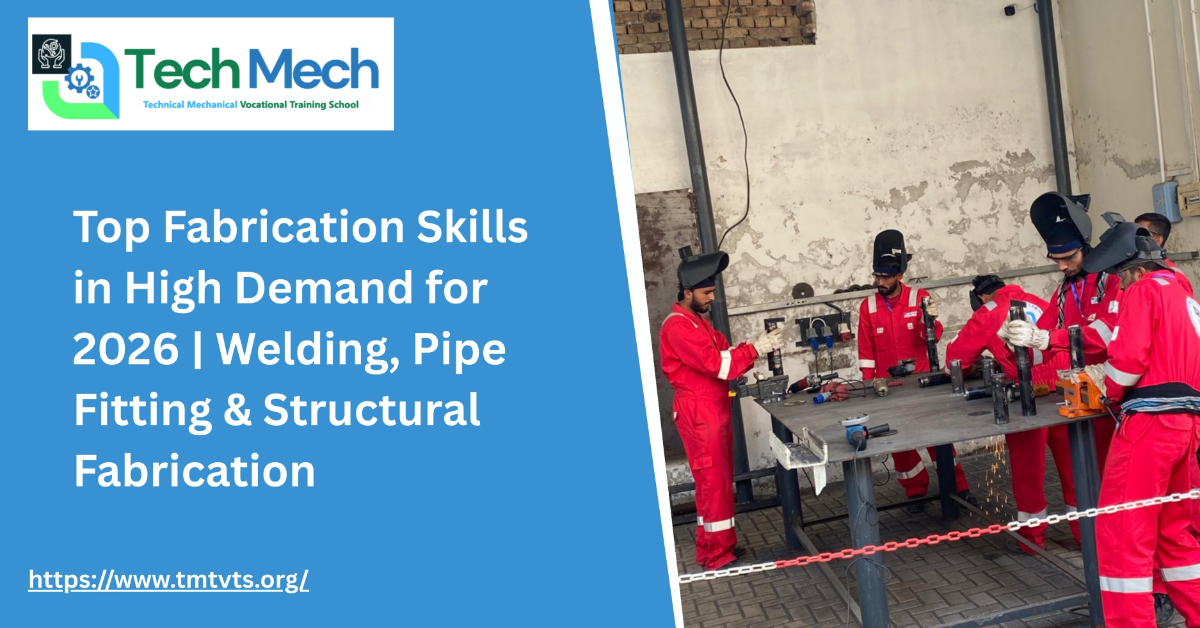

The fabrication industry is evolving rapidly, driven by technological advancements and infrastructure growth, especially in Pakistan and the Gulf region. For students, fresh graduates, and job seekers looking to build a lucrative career, understanding the top fabrication skills in demand is critical. From advanced welding techniques to pipe fitting and structural fabrication, acquiring the right skills can open doors to high-paying opportunities in construction, oil and gas, manufacturing, and energy sectors.
In this guide, we’ll explore Top Fabrication Skills in High Demand for 2026, provide actionable tips, and highlight career pathways that can help you thrive in Pakistan and Gulf markets.
Understanding Fabrication and Its Career Potential
Fabrication involves creating structures, machines, and equipment from raw materials like metals, pipes, and steel. It requires a combination of technical expertise, precision, and problem-solving skills.
Why Fabrication Skills Are in Demand:
- Infrastructure growth: Gulf countries like UAE, Qatar, and Saudi Arabia are investing heavily in construction and energy projects.
- Industrial expansion in Pakistan: Manufacturing plants, refineries, and power projects are increasing demand for skilled fabricators.
- Technological innovation: Automated welding and structural fabrication techniques require trained professionals.
Career opportunities include welders, pipe fitters, structural fabricators, millwrights, and grinders, all of whom are vital to project success.
Welding Skills in High Demand
Welding remains the backbone of fabrication work. The type of welding skill you learn can significantly impact your employability. Here are the key welding types expected to be in high demand in 2026:
SMAW (Shielded Metal Arc Welding)
SMAW, also known as stick welding, is one of the oldest and most widely used welding techniques. It is particularly valued for its versatility in outdoor and heavy-duty projects.
Why SMAW is in Demand:
- Can weld thick metals and structures.
- Portable and suitable for remote sites in Pakistan and Gulf projects.
- Often used in pipelines, shipbuilding, and construction.
Career Tip: Certification from Pakistan’s best training institutes center can help secure jobs in oil refineries, shipyards, and large construction firms.
GTAW (Gas Tungsten Arc Welding / TIG Welding)
GTAW, commonly called TIG welding, is prized for precision and clean welds. It is often used in industries where aesthetics and high-quality welds are crucial.
Key Features:
- Excellent for stainless steel and non-ferrous metals.
- Produces minimal spatter and precise joints.
- Ideal for aerospace, automotive, and specialized fabrication work.
Example: A stainless-steel water treatment plant in Karachi may require GTAW-certified welders for piping and pressure vessels.
FCAW (Flux-Cored Arc Welding)
FCAW is a semi-automatic welding technique that combines efficiency with strong welds, making it popular in large-scale projects.
Benefits:
- Fast welding speed for high-volume work.
- Can handle thick materials, ideal for structural steel projects.
- Widely used in industrial fabrication plants and offshore projects.
Industry Insight: Many Gulf construction projects now prefer FCAW-certified welders due to project deadlines and material requirements.
Pipe Fitting: Precision and Skill
Pipe fitting is another fabrication skill that remains in high demand. It involves assembling, installing, and maintaining piping systems used in water, oil, gas, and chemical industries.
Core Skills:
- Measuring, cutting, and threading pipes accurately.
- Understanding pressure systems and flow requirements.
- Welding and joining pipes using SMAW, GTAW, or FCAW techniques.
Realistic Example: In a Dubai-based oil refinery, pipe fitters are needed to ensure pipelines meet strict safety standards and operate efficiently.
Career Tip: Combining pipe fitting skills with welding certification significantly increases job opportunities in Pakistan and the Gulf.
Structural Fabrication: Building the Future
Structural fabrication involves creating steel frameworks, beams, and large-scale constructions. This skill is crucial for skyscrapers, bridges, and industrial facilities.
Key Skills:
- Reading and interpreting blueprints.
- Cutting, welding, and assembling steel structures.
- Knowledge of mechanical tools and fabrication software.
Industry Insight: With mega projects like NEOM in Saudi Arabia and ongoing construction booms in UAE, structural fabricators are highly sought after.
Example: A millwright or grinder in Karachi may work on steel structures for ports or power plants, ensuring safety and structural integrity.
Emerging Technical Skills for Fabricators
Beyond traditional skills, modern fabrication requires technical adaptability.
1. Automation and CNC Machining
- Familiarity with robotic welding and CNC cutting tools.
- Reduces human error and increases efficiency.
2. Advanced Blueprint Reading
- Digital blueprints and 3D modeling are becoming standard.
- Understanding software like AutoCAD or SolidWorks enhances employability.
3. Material Science Knowledge
- Knowing which metals or alloys to use for specific projects.
- Improves project efficiency and safety.
Actionable Tips to Boost Your Career
- Enroll in a recognized training institute: Look for Tech Mech Technical Vocational Training School for welding, pipe fitting, millwright, and grinder courses.
- Gain multiple certifications: Having SMAW, GTAW, and FCAW certifications makes you versatile.
- Build practical experience: Participate in internships or apprenticeship programs in Pakistan or Gulf projects.
- Stay updated on industry trends: Follow new fabrication technologies and construction standards.
- Network with recruiters: Many Gulf companies actively hire certified welders, pipe fitters, and structural fabricators.
Frequently Asked Questions (FAQs)
Q1: Which welding skill is best for beginners in Pakistan?
A: SMAW is ideal for beginners due to its simplicity and wide application in construction and industrial projects.
Q2: Can I work in the Gulf with Pakistani welding certification?
A: Yes, international projects often accept certified welders from Pakistan, especially if trained at recognized institutes.
Q3: Is pipe fitting more in demand than welding?
A: Both skills are in demand, but pipe fitting combined with welding certifications significantly increases job opportunities.
Q4: How long does it take to become a certified welder or pipe fitter?
A: Depending on the program, certification can take 3–12 months, including practical training.
Q5: Which institutes offer the best CIVIL courses IN Pakistan jobs and fabrication training?
A: Institutes like Tech Mech Technical Vocational Training School provide recognized courses for welding, pipe fitting, and structural fabrication.
Looking to start your career in welding, pipe fitting, or structural fabrication?
Tech Mech Technical Vocational Training School offers expert-led programs for grinders, millwrights, pipe fitters, and welders, helping students secure high-demand jobs in Pakistan and the Gulf.
Contact us today to kickstart your career and join the growing workforce of skilled fabrication professionals.
Summary
The demand for skilled fabricators is set to grow in 2026, with welding (SMAW, GTAW, FCAW), pipe fitting, and structural fabrication at the forefront. Choosing the right institute, gaining certifications, and staying updated with emerging technical skills can make a significant difference in career success. Investing in practical, hands-on training today ensures long-term opportunities in Pakistan and Gulf industries.