
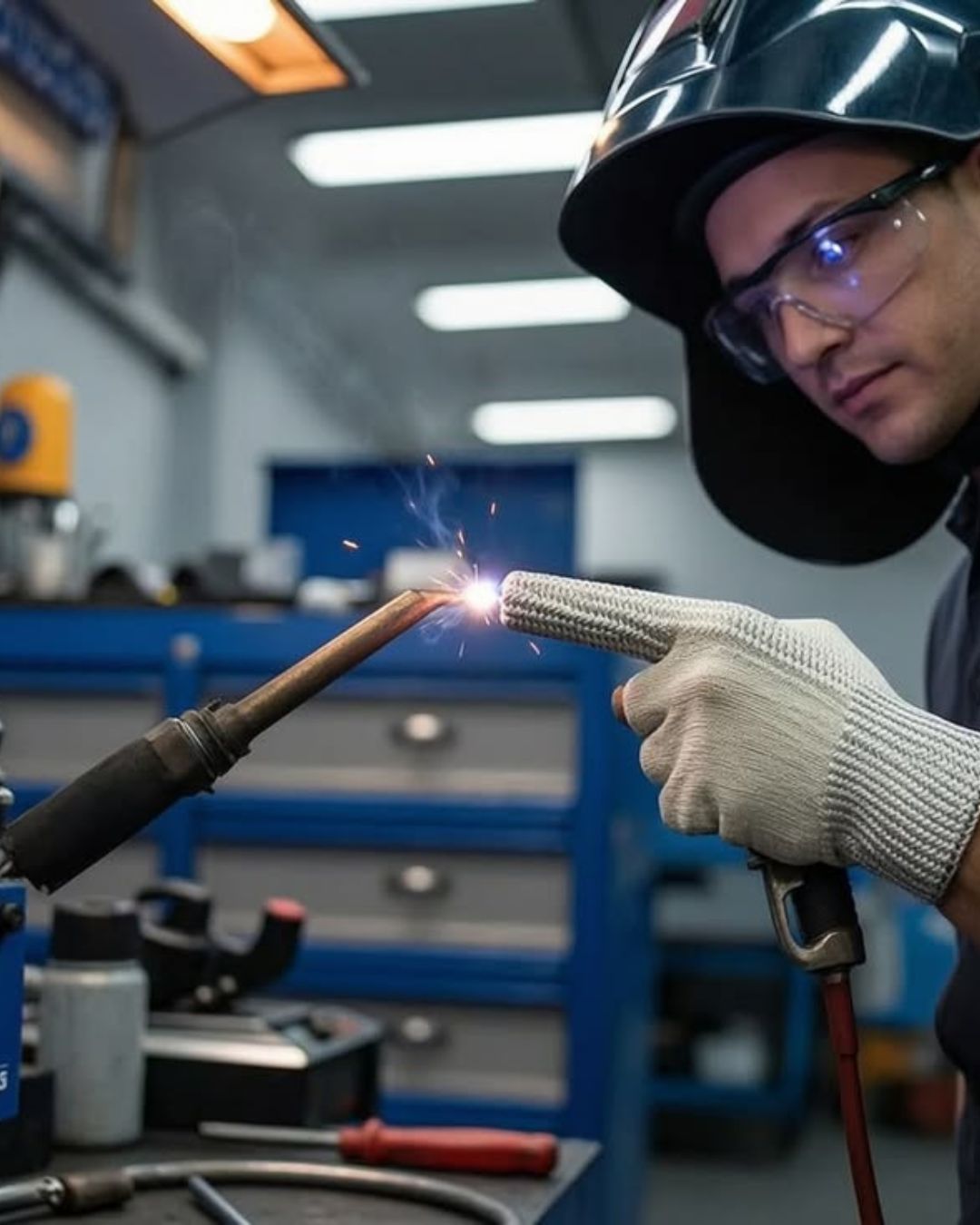

Tech-Mech helps prepare skilled workers for international employment through technical training and overseas recruitment services. For companies involved in construction, manufacturing, oil and gas, and other industrial sectors, finding the right welder is about more than checking a certificate. During employer hiring welders, companies usually look at a combination of certification, practical experience, technical ability, safety awareness, and reliability. A good welding certification program can give workers a strong foundation, but employers also want to see how effectively those skills can be applied in real working environments.
1. Relevant Welding Certification
One of the first things employers check is whether a candidate has completed an appropriate welding certification program. Certification can demonstrate that a welder has received formal training and has been assessed against specific requirements.
However, the right certification depends on the job. A company working on pipelines may have different requirements from a construction company hiring structural welders.
Employers should therefore check:
- Type of welding certification
- Welding process covered
- Relevant experience
- Certification validity
- Project-specific requirements
2. Strong Technical Skills
Certification alone does not make someone a successful welder. Employers need workers with strong technical skills who can consistently produce quality work.
Depending on the position, welders may need experience with processes such as:
- Arc welding
- MIG/MAG welding
- TIG welding
- Pipe welding
- Structural welding
A candidate who understands equipment, materials, welding positions, and joint preparation can be more valuable to an industrial employer.
3. Practical Industrial Experience
Experience matters because industrial welding can be very different from classroom training. Employers often prefer candidates who have worked on actual construction, manufacturing, fabrication, or maintenance projects.
During recruitment, companies may ask about previous projects, responsibilities, materials worked with, and welding processes used.
Practical experience can also help workers adapt more quickly to a new workplace.
4. Knowledge of Fabrication
Many employers look for welders who also understand fabrication. Fabrication workers may be involved in measuring, cutting, shaping, fitting, and assembling metal components before welding.
A welder with fabrication knowledge can understand the complete process rather than focusing only on the final welding stage.
This combination of skills can be particularly useful in construction, steel fabrication, manufacturing, and industrial maintenance.
5. Commitment to Welding Safety
Safety is a major concern during industrial hiring. Welding involves heat, sparks, fumes, electrical equipment, and potentially hazardous working conditions.
Employers want workers who understand:
- Personal protective equipment
- Fire prevention
- Safe equipment handling
- Hot-work procedures
- Workplace hazards
- Basic emergency procedures
A technically skilled worker who does not follow safety procedures can create unnecessary risks for the entire team.
6. Ability to Read Technical Drawings
Modern industrial projects often require welders to work from technical drawings and specifications.
Being able to understand measurements, symbols, dimensions, welding joints, and project instructions helps ensure that work is completed correctly.
This is one reason professional welding courses often include blueprint and drawing interpretation as part of technical training.
7. Quality and Attention to Detail
A good welder understands that small mistakes can create bigger problems. Employers look for workers who pay attention to alignment, weld appearance, consistency, and possible defects.
Quality-focused welders can help reduce rework, material waste, and project delays.
8. Reliability and Teamwork
Technical ability is important, but employers also need dependable workers. Welders often work alongside engineers, supervisors, fitters, fabricators, and other tradespeople.
Good communication, punctuality, teamwork, and a professional attitude can make a significant difference in project performance.
Successful employer hiring welders requires a complete evaluation rather than simply checking whether a candidate has a certificate. Employers should consider the worker’s welding certification program, technical skills, practical experience, fabrication knowledge, safety awareness, and reliability.
For workers, completing recognised welding courses and gaining hands-on experience can improve their chances of successful recruitment. For companies, a structured recruitment and industrial hiring process can help identify skilled professionals who are ready to contribute to demanding projects.
With the right combination of training, certification, and experience, certified welders can build strong careers while helping employers develop a dependable industrial workforce.