

In today’s fast-changing technical world, electrical skills are no longer optional they are essential. As someone directly involved in technical and vocational training at TMTVTS, I have personally witnessed how the role of an electrician has evolved. What was once limited to basic wiring and simple repairs has now expanded into a professional, regulated, and highly technical career.
Many electricians in Pakistan already possess electrician basic knowledge, and I respect their experience and hard work. However, I must say honestly: basic knowledge alone is no longer enough. The modern electrical industry especially in countries like Saudi Arabia and Qatar demands advanced electrician skills, practical expertise, safety awareness, and internationally recognized training standards.
This is exactly where structured training, hands-on learning, and qualifications such as NVQ Level 3 electrical installation become critical.
What Is an Electrician?
An electrician is a skilled professional responsible for installing, maintaining, and repairing electrical systems in residential, commercial, and industrial settings. They work with wiring, electrical panels, switches, and safety devices to ensure a reliable and safe power supply. Electricians follow electrical codes and safety standards to prevent hazards and equipment damage. In today’s modern world, electricians must continuously upgrade their skills to keep pace with new technologies and industry requirements.
Why Electrical Skills Matter More Than Ever
The modern world runs on electricity. From residential buildings and commercial complexes to industrial plants and smart infrastructure, electricians are the backbone of development. But employers today are not just looking for someone who can connect wires they want professionals with complete electrician knowledge.
At TMTVTS, our focus is not just teaching theory. We emphasize electrical installation practical training, because real skill is built with tools in hand, not just books on the table.
Basic Knowledge vs Professional Electrical Skills
In Pakistan, many electricians learn through experience. This gives them confidence, but often without:
- Proper safety standards
- Load calculation knowledge
- Modern tools handling
- International wiring codes
- Fault diagnosis techniques
I have personally seen this gap during practical tests conducted by delegates from Saudi Arabia and Qatar at TMTVTS.
A Real Experience at TMTVTS
When official delegates from Saudi Arabia and Qatar visited TMTVTS, they conducted hands-on practical tests to evaluate aspiring electricians. Many candidates had basic electrician knowledge—switches, sockets, and simple wiring—but the delegates were looking for more.
They tested critical skills such as:
- Safety awareness
- Understanding electrical drawings
- Proper electrical installation practical skills
- Fault finding under pressure
The result was clear: while basic knowledge exists in Pakistan, modern international standards demand advanced electrical skills. Those who were selected were not just experienced they had been trained through TMTVTS electrical courses, designed to prepare students for real-world challenges.
If you are looking to enhance your electrician knowledge and gain internationally recognized practical skills, admissions for TMTVTS electrical courses are now open. Upgrade your expertise, master practical training, and prepare for high-demand careers both locally and abroad.
Core Electrical Skills Every Future Electrician Must Learn
1. Electrical Safety & Regulations
Safety is the foundation of all electrical work. A professional electrician must understand:
- Electrical hazards
- PPE (Personal Protective Equipment)
- Lockout and tagout procedures
- Earthing and grounding systems
Without safety knowledge, even skilled electricians put their lives at risk.
2. Electrical Installation Practical Skills
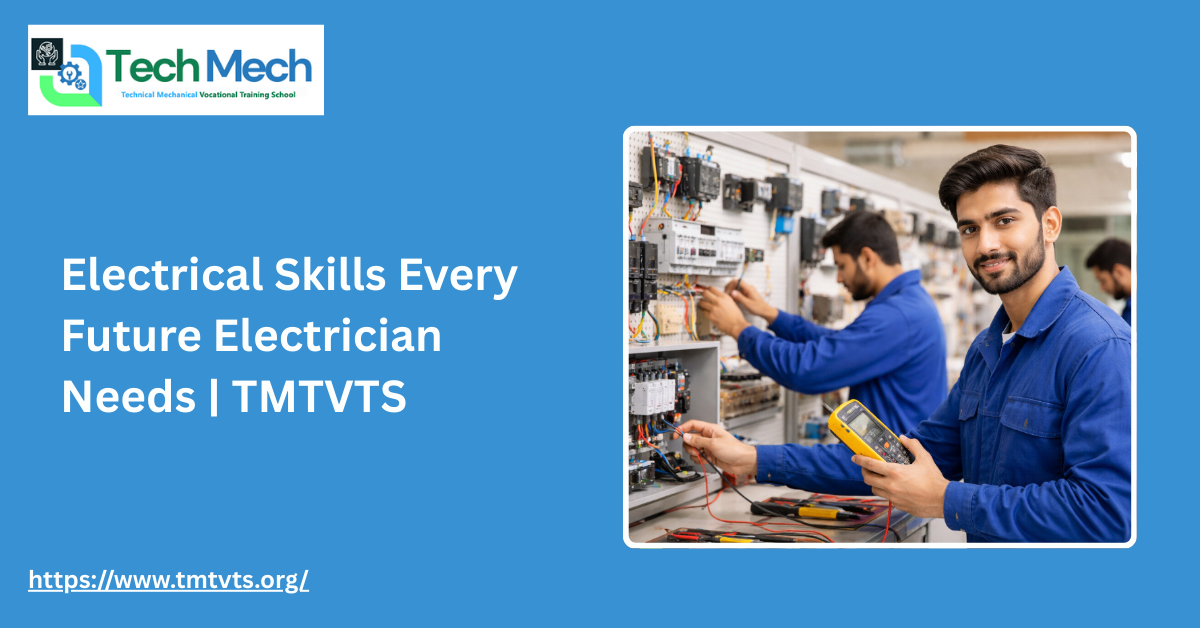
This is where real learning begins. At TMTVTS, we strongly focus on electrical installation practical training, including:
- Conduit bending and installation
- Cable sizing and selection
- Distribution board wiring
- MCB, RCCB, and ELCB installation
Practical skills separate a helper from a professional electrician.
3. Electrician Basic Knowledge (Strong Foundation)
Every future electrician must master:
- Ohm’s Law
- Voltage, current, resistance
- AC and DC systems
- Single-phase and three-phase supply
Without this basic electrician knowledge, advanced learning becomes difficult.
4. Reading Electrical Drawings & Schematics
Modern projects rely on drawings. A skilled electrician must be able to:
- Read wiring diagrams
- Understand load schedules
- Follow circuit layouts
International employers consider this a mandatory electrician skill.
5. NVQ Level 3 Electrical Installation Skills
The NVQ Level 3 electrical installation qualification is a game-changer. It proves that an electrician:
- Meets international competency standards
- Can work independently
- Understands safety, installation, and maintenance
At TMTVTS, we align our training with NVQ standards to prepare students for both local and overseas markets.
6. Fault Finding & Troubleshooting
One of the most demanded electrician skills is fault diagnosis:
- Short circuits
- Overloading
- Earth leakage
- Equipment malfunction
Employers value electricians who can identify and solve problems quickly.
7. Modern Tools & Technology
The electrical field is evolving rapidly. Electricians must learn to use:
- Digital multimeters
- Insulation testers
- Clamp meters
- Modern power tools
Traditional methods alone cannot meet today’s standards.
Why Pakistan Needs Skill Upgradation
Pakistan has talented workers, but the global market is competitive. Gulf countries, especially Saudi Arabia and Qatar, now prefer electricians who:
- Have structured training
- Pass practical skill assessments
- Understand modern electrical systems
This is why I always say:
Experience is valuable, but certified skills open doors.
How TMTVTS Prepares Future Electricians
At TMTVTS, our mission is clear:
Transform basic electricians into job-ready professionals.
We focus on:
- Hands-on workshops
- Real-world electrical installation practical tasks
- Safety-first learning
- Industry-oriented training
When international delegates visit, our students are confident—not nervous—because they are trained to international expectations.
Frequently Asked Questions (FAQs)
Q1: Are basic electrician skills enough for overseas jobs?
No. Basic electrician knowledge is a starting point, but overseas employers demand advanced electrical skills and practical competence.
Q2: Why is practical training more important than theory?
Because electrical work is hands-on. Without electrical installation practical experience, theory alone cannot prepare you for real jobs.
Q3: What is NVQ Level 3 electrical installation?
It is an internationally recognized qualification that validates professional electrician skills, safety knowledge, and practical competence.
Q4: Can experienced electricians benefit from training?
Yes. Many experienced electricians upgrade their electrician knowledge at TMTVTS to meet modern standards and pass international tests.
Q5: Do Gulf employers really test electricians practically?
Yes. I have personally seen Saudi and Qatar delegates conduct practical tests and select candidates based on skills not claims.
The Reality Every Electrician Must Accept
Every electrician in Pakistan has some level of basic knowledge but the modern world requires continuous learning. Technology, safety rules, and industry standards are changing fast.
If you want to:
- Earn better income
- Work internationally
- Gain professional respect
Then upgrading your electrical skills is not a choice it is a necessity.
Are you serious about your future as an electrician?
If you are serious about your future as an electrician, now is the time to act.
At TMTVTS, we don’t just teach we prepare you for the real world.
- Upgrade your electrical skills
- Master electrical installation practical training
- Build strong electrician knowledge
- Prepare for NVQ Level 3 electrical installation
Contact us today and take the next step toward a modern, professional electrical career.