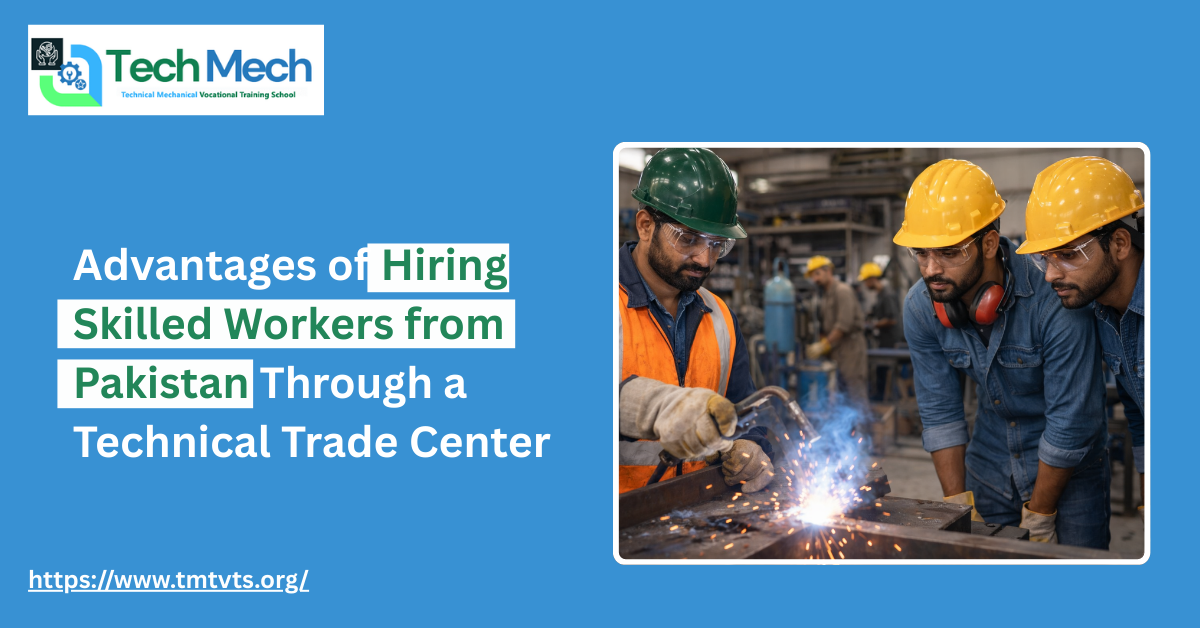


Welding is an important technical skill used in construction, manufacturing, engineering, shipbuilding, automotive production, oil and gas, and industrial projects. As demand for skilled welders continues to increase in Pakistan and overseas markets, professional training can help individuals develop practical skills and improve their career opportunities.
Choosing the right welding courses in Pakistan can give students a strong foundation in welding techniques, workplace safety, equipment handling, and technical procedures. For people planning to work in the GCC or other international markets, quality welding training Pakistan can also help prepare them for industry requirements and practical assessments.
Why Choose Welding as a Career?
Welding is a hands-on profession with applications across many industries. Skilled welders are needed to join and repair metal components, fabricate structures, maintain machinery, and support large construction and industrial projects.
Some common industries that hire welders include:
- Construction
- Manufacturing
- Oil and gas
- Shipbuilding
- Automotive
- Steel fabrication
- Industrial maintenance
- Infrastructure development
With proper training and experience, welders can pursue opportunities both in Pakistan and abroad.
What Do Welding Courses Teach?
A good welding course should combine classroom learning with practical training. Students learn how different welding processes work and how to select the appropriate method for different materials and applications.
Depending on the course, training may cover:
- Arc welding
- MIG welding
- TIG welding
- Gas welding
- Metal preparation
- Welding equipment operation
- Joint preparation
- Welding positions
- Basic blueprint reading
- Workplace safety
- Inspection and quality control
Practical experience is particularly important because welding requires accuracy, hand control, and attention to detail.
Importance of Welding Training in Pakistan
Professional welding training Pakistan programs can help beginners develop the technical knowledge and practical confidence needed for employment. Training also allows experienced workers to improve their existing abilities and learn new welding techniques.
Students should look for courses that provide sufficient workshop practice rather than focusing only on theoretical lessons. Hands-on training helps learners understand equipment, materials, welding positions, and common problems that occur during actual work.
Welding Certification
A recognized welding certification can strengthen a welder’s professional profile. Certification demonstrates that an individual has completed specific training or successfully passed an assessment according to the requirements of the relevant program or standard.
However, certification requirements can vary depending on the employer, industry, welding process, and destination country. Anyone planning to work overseas should check the exact certification and testing requirements for the target job.
Developing Professional Welding Skills
Successful welders need more than the ability to operate a welding machine. Important welding skills include accuracy, patience, concentration, safety awareness, and the ability to understand technical instructions.
Professional welders should also learn how to:
- Inspect welds for defects
- Maintain welding equipment
- Follow safety procedures
- Understand material properties
- Work from technical drawings
- Select suitable welding techniques
- Maintain consistent weld quality
These skills can make a significant difference when applying for skilled welding positions.
Welder Training for Overseas Careers
Pakistan’s skilled workforce has access to employment opportunities in construction, manufacturing, fabrication, and industrial projects in countries such as Saudi Arabia, the UAE, Qatar, Oman, Kuwait, and Bahrain.
Candidates interested in overseas employment should consider combining formal welder training with practical work experience. Employers often look for workers who can demonstrate both technical knowledge and real-world skills.
Trade testing may also be part of the recruitment process for overseas welding jobs. Candidates should therefore be prepared to demonstrate their practical abilities.
How to Choose the Right Welding Course
Before enrolling, students should compare courses based on:
- Practical workshop training
- Welding processes covered
- Instructor experience
- Course duration
- Equipment availability
- Safety training
- Certification options
- Industry relevance
- Job or career support
A course that offers strong practical training can provide better preparation for real workplace conditions.
Conclusion
The demand for skilled welders continues to create opportunities across construction, manufacturing, fabrication, and industrial sectors. Choosing suitable welding courses in Pakistan can help individuals build practical abilities and prepare for professional careers.
With quality welding training Pakistan, recognized welding certification, proper welder training, and strong welding skills, candidates can improve their chances of securing employment in Pakistan and international markets. The key is to choose practical, industry-relevant training and continue developing skills through experience and professional learning.