
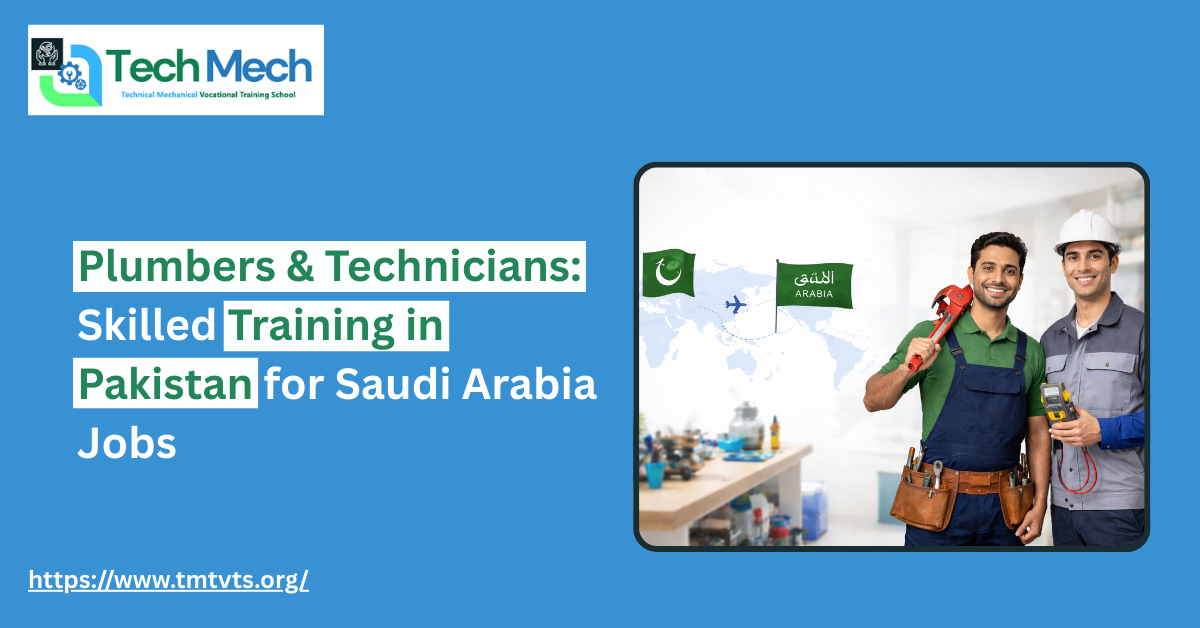

Skilled plumbers and technicians are the backbone of every industrial, residential, and commercial project. Whether it’s installing water systems, maintaining machinery, or ensuring smooth operations in factories, these professionals are crucial for safety, efficiency, and productivity.
Saudi Arabia has a growing demand for trained technical workers in plumbing, electrical, mechanical, and HVAC sectors. Companies rely on competent professionals to maintain operations and comply with safety regulations. Hiring the right skilled workers ensures fewer errors, lower operational costs, and long-term project success.
For Pakistani workers, this represents a huge opportunity. With the right training, certification, and experience, plumbers and technicians can secure well-paying jobs in Saudi Arabia.
Understanding the Role – Plumbers & Technicians
Before hiring or training, it’s essential to understand the role:
- Plumbers handle installation, maintenance, and repair of water, gas, and drainage systems. They also ensure compliance with safety and hygiene standards.
- Technicians cover mechanical, electrical, and digital systems in factories, construction sites, and residential projects. Their tasks include equipment installation, repair, troubleshooting, and preventive maintenance.
Each role requires technical knowledge, hands-on skills, and problem-solving abilities. Knowing this helps candidates prepare for overseas placements and allows employers to understand exactly what skills are needed.
Step 1: Define Your Training Goals
The first step is clarity. Whether you are a trainee or an employer, defining your goals is essential:
- For Trainees: Are you preparing for Saudi Arabia placement in plumbing, electrical, or mechanical work? Do you need beginner-level or advanced training?
- For Employers/Placement Agencies: What level of expertise do you require? Are you hiring for industrial projects, residential installations, or commercial facilities?
Clear goals make training programs more effective and ensure that graduates meet the expectations of overseas employers.
Step 2: Direct Training vs Technical Training Center
Individuals can try to learn skills on the job or enroll in a structured training program:
- Direct Learning: Learning on-site may work for small projects but often lacks formal certifications recognized overseas.
- Technical Training Center (Recommended): Enrolling in a certified center in Pakistan ensures structured learning, safety awareness, and recognized certificates for Saudi Arabia jobs.
Certified training centers provide hands-on practice, experienced trainers, and access to real tools and equipment. These programs shorten the learning curve and increase employability.
Step 3: Hands-On Skills & Practical Experience
Practical experience is the foundation of technical careers. For plumbers and technicians, this includes:
- Using plumbing tools for pipe fitting, leak repairs, and system installations.
- Operating electrical and mechanical tools safely.
- Troubleshooting real-life problems on equipment, machinery, and household systems.
- Understanding industry-standard procedures and safety protocols.
Training programs must combine theory with practical labs. Candidates who can demonstrate skills under supervision are highly preferred by Saudi employers.
Step 4: Certification & Qualification Checks
Saudi employers often require recognized certifications. Ensure the training center provides:
- National vocational certificates recognized by Pakistan’s Technical Education and Vocational Training Authority (TEVTA) or equivalent.
- Internationally recognized credentials where applicable (e.g., HVAC, electrical licenses).
- Safety and compliance certifications for industrial work environments.
Certification gives candidates credibility and eases the visa and recruitment process for overseas employment.
Step 5: Health & Physical Fitness Evaluation
Technical work is physically demanding:
- Plumbers often work in confined spaces, lift heavy pipes, and handle water pressure systems.
- Technicians may work on industrial machinery or in high-temperature environments.
Saudi employers may request a medical fitness certificate, especially for overseas workers. Ensuring physical fitness helps avoid accidents and ensures higher performance.
Step 6: Salary, Benefits, and Retention
A skilled workforce is motivated by fair compensation. For Saudi Arabia:
- Plumbers and technicians receive competitive salaries depending on experience, certification, and project type.
- Overseas packages may include accommodation, transport, insurance, and overtime pay.
- Training centers often prepare candidates for expected salary ranges and benefits, making them ready for negotiation.
Offering clear incentives improves retention and reduces turnover, creating long-term stability for both employees and employers.
Step 7: Training & Onboarding
Proper onboarding ensures that trained workers adapt quickly:
- Introduction to project standards and safety regulations.
- Familiarity with tools, machinery, and workplace protocols.
- Soft skills: punctuality, teamwork, communication, and problem-solving.
Structured training and onboarding increase confidence and efficiency for overseas roles.
Step 8: Rules, Expectations, and Contracts
Clear communication avoids misunderstandings:
- Set working hours, overtime policies, and leave rules.
- Define responsibilities and reporting structures.
- Provide written contracts specifying salary, benefits, and termination policies.
This transparency builds trust and prepares workers for professional overseas environments.
Step 9: Monitoring Performance & Feedback
Training is ongoing:
- Evaluate trainee progress regularly.
- Conduct practical tests and assessments.
- Provide feedback for improvement.
Continuous assessment ensures candidates meet industry standards and are fully prepared for Saudi Arabia projects.
Special Considerations for Overseas Hiring
Hiring for Saudi Arabia requires extra care:
- Ensure proper work visas, legal documentation, and compliance with labor laws.
- Medical checks and police clearance may be required.
- Use licensed recruitment agencies to avoid legal and administrative challenges.
Following proper procedures protects both workers and employers.
Common Mistakes to Avoid
- Skipping proper training: Leads to underperformance and safety risks.
- Ignoring certifications: Reduces credibility and employability.
- Neglecting physical fitness: Workers may face medical issues or accidents.
- Unclear contracts: Causes disputes and misunderstandings overseas.
Avoid these mistakes to ensure a smooth recruitment and placement process.
Why Professional Training Matters?
Investing in training ensures:
- Skilled, confident, and reliable plumbers and technicians.
- Reduced risk of accidents and project delays.
- Improved performance and satisfaction for employers and workers.
For Saudi employers, professionally trained workers are a guarantee of quality and compliance.
Conclusion
Becoming a certified plumber or technician in Pakistan opens doors to lucrative Saudi Arabia jobs. By choosing a certified technical training center, candidates gain skills, certification, and hands-on experience that employers value.
Proper preparation, physical fitness, and awareness of contracts and benefits make the transition overseas smoother and more rewarding.
Looking to become a skilled Plumber or Technician for Saudi Arabia jobs?
Tech Mech Training Center in Pakistan offers certified programs, hands-on practice, and overseas placement support. Contact us today and start your journey to a professional career abroad!
FAQs – Plumbers & Technicians Training for Saudi Arabia Jobs
What qualifications are required to become a plumber or technician for Saudi Arabia?
Most employers prioritize hands-on skills and vocational training over formal degrees. Completing a certified technical program in Pakistan, like the one at Tech Mech Training Center, and obtaining national or international certification is essential.
How long does the training program take?
Training duration depends on the trade and skill level:
- Basic courses: 3–6 months
- Advanced courses: 6–12 months
- Specialized programs (e.g., industrial plumbing, HVAC, electrical): 12 months or more
Do I need prior experience to enroll?
No, most technical training centers accept beginners. Practical experience is gained during the program through hands-on workshops and simulations. Experienced workers can also enroll for advanced or refresher courses.
Will the training help me get a job in Saudi Arabia?
Yes. Training centers like Tech Mech provide industry-relevant skills, certification, and overseas placement support. Employers in Saudi Arabia prefer certified workers who are ready to start immediately.
What kind of jobs can I get after completing the program?
Graduates can work as:
- Plumbers (residential, commercial, or industrial)
- HVAC technicians
- Electrical technicians
- Mechanical technicians
- Maintenance technicians in factories, hotels, hospitals, and residential projects
Do I need to be physically fit?
Yes. Technical work often involves lifting, bending, and standing for long hours. Some employers may also require medical fitness certificates before issuing work visas.
What salary can I expect in Saudi Arabia?
Salaries vary by experience, skill level, and project type. Entry-level plumbers and technicians can expect competitive packages, often including accommodation, transportation, and medical coverage. Experienced professionals earn higher wages.
Is it better to enroll in a training center than learn on the job?
Yes. Training centers provide structured learning, recognized certification, hands-on practice, and overseas placement support, which significantly increases employability compared to informal on-the-job learning.
Are there legal or visa requirements for working in Saudi Arabia?
Yes. All overseas workers must have proper work visas, contracts, and compliance with Saudi labor laws. Certified training centers often guide candidates through legal documentation and visa processes.
Can I upgrade my skills after initial training?
Absolutely. Many training centers offer advanced courses or refresher programs to specialize in industrial systems, machinery, or new technology, helping you earn better positions and higher salaries overseas.