
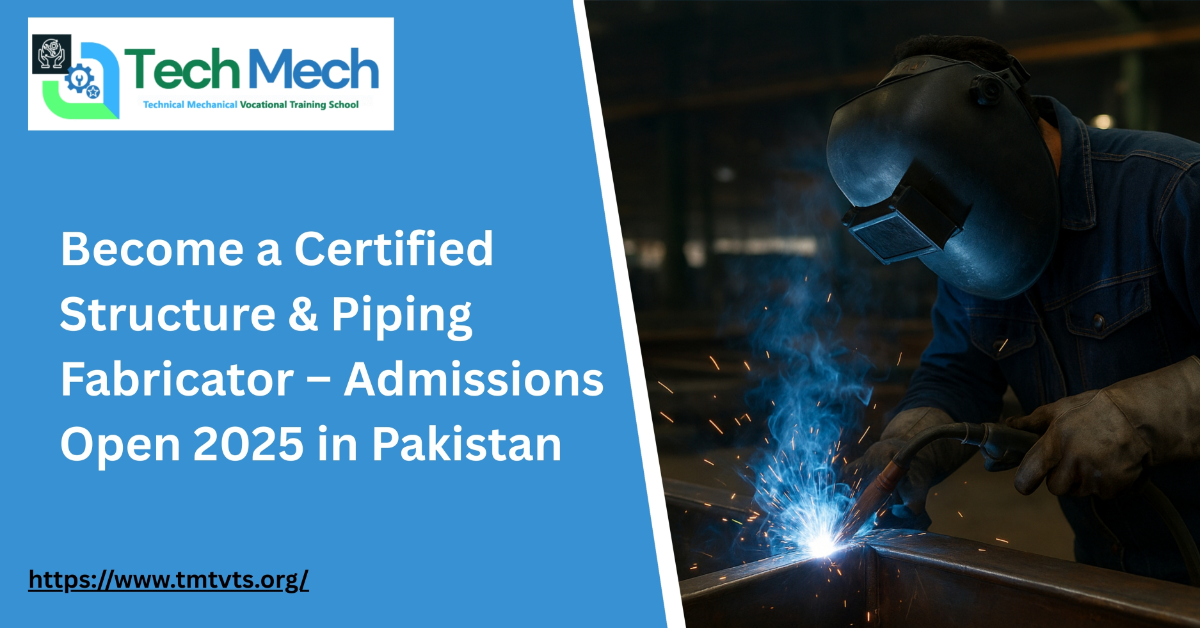

If you’ve ever visited a construction site, an industrial plant, or a fabrication workshop, you’ve seen how crucial structure and piping fabricators are. These skilled workers shape metal, read drawings, prepare components, and build the steel structures and pipelines that keep industries running.
In Pakistan and across the Gulf especially in Saudi Arabia, UAE, Qatar, Bahrain, and Oman qualified fabricators are always in high demand. Companies want people who can read isometric drawings, measure accurately, fabricate beams and plates, and deliver quality work without constant supervision.
But here’s the challenge:
Many experienced Pakistani fabricators return from the Gulf after 10–15 years of work, yet still cannot properly read drawings, identify materials, calculate lengths, or follow fabrication codes. This limits their salaries, promotion opportunities, and chances of getting selected by international companies.
The good news?
Structured training and certification can change everything. And with admissions open in Pakistan for 2025 fabrication courses, this is the perfect time to upgrade your skills and boost your career.
Why Fabrication Skills Matter More Than Ever
Fabrication is no longer just cutting and welding. Modern industries expect fabricators to:
- Read and understand technical drawings
- Identify beams, channels, plates, and pipe schedules
- Perform accurate measurements
- Follow safety and quality standards
- Work with precision tools
- Fabricate according to codes like ASME and AWS
Without proper training, even skilled welders and helpers struggle to move up in their career.
A proper fabrication certificate can help you get jobs in:
- Oil & Gas companies
- Power plants
- Construction projects
- Shipyards
- Manufacturing industries
- EPC contractors like McDermott, Daewoo, Samsung, NPCC
This is why choosing the best fabrication training institute in Pakistan is so important.
Challenges Most Pakistani Fabricators Face
Even experienced fabricators face problems that hurt their performance and confidence. Here are the most common issues explained in a way that matches real workshop situations.
1. Drawing Dekhna Alag Baat Hai… Samajhna Alag
Ask any fabricator to be honest and many will say:
“Drawing bari mushkil lagti hai. Lines hi lines hoti hain… samajh nahi aata kya bana hua hai.”
Most workers have looked at drawings, but few have been taught how to read them.
Common problems:
- Isometric aur orthographic views ka farq nahi pata
- Dimensions samajh nahi aati
- Symbols, bevel angles, welding notations confusing lagte hain
- Spool drawings aur GA drawings mein difference clear nahi
A good training program teaches drawings step-by-step until the student says:
“Ab drawing dekhte hi samajh aa jata hai kya banana hai.”
2. Measurement & Marking Issues
Many workers measure “approximately.” Some say:
“Main andaze se kar leta hoon. Kabhi kabhi mis-match ho jata hai.”
But industries now demand accuracy not guesswork.
Training fixes these issues by teaching:
- Tape measurement accuracy
- Vernier usage
- Try square and center marking
- Bevel angle measurement
- Practical cutting and marking techniques
3. Material Identification Problems
In the Gulf, foremen usually tell workers which beam or pipe to pick. So workers never learn the basics.
When asked: “Yeh I-beam hai ya H-beam?” Many reply: “Sir, maloom nahi… humko ustaad bolta tha koun sa uthana hai.”
Training teaches:
- Beam, channel, angle identification
- Pipe schedules
- Plate thickness reading
- Steel grades
- Material selection for different projects
4. Weak Fabrication Sequence Knowledge
A fabricator must follow a sequence like:
- Drawing reading
- Marking
- Cutting
- Beveling
- Fit-up
- Tack welding
- Quality check
Without training, workers randomly choose steps, causing:
- Misalignment
- Gaps
- Wastage
- Rework
5. Piping Fabrication Gaps
Many fabricators say: “Pipe fitting mein thoda sa kam kiya hai, lekin proper fit-up rules nahi pata.”
Training covers:
- Spool fabrication
- Flange alignment
- Tack welding rules
- Support types
- Root gap & bevel preparation
This is critical for Gulf companies that test fabricators before hiring.
6. Safety Practices Are Often Ignored
Fabrication involves:
- Sharp edges
- Heavy metals
- Grinder sparks
- Welding radiation
Workers without safety training risk injuries.
Training ensures:
- PPE usage
- Safe machine operation
- Hazard identification
- Workplace safety rules
7. Struggles in Gulf Job Tests
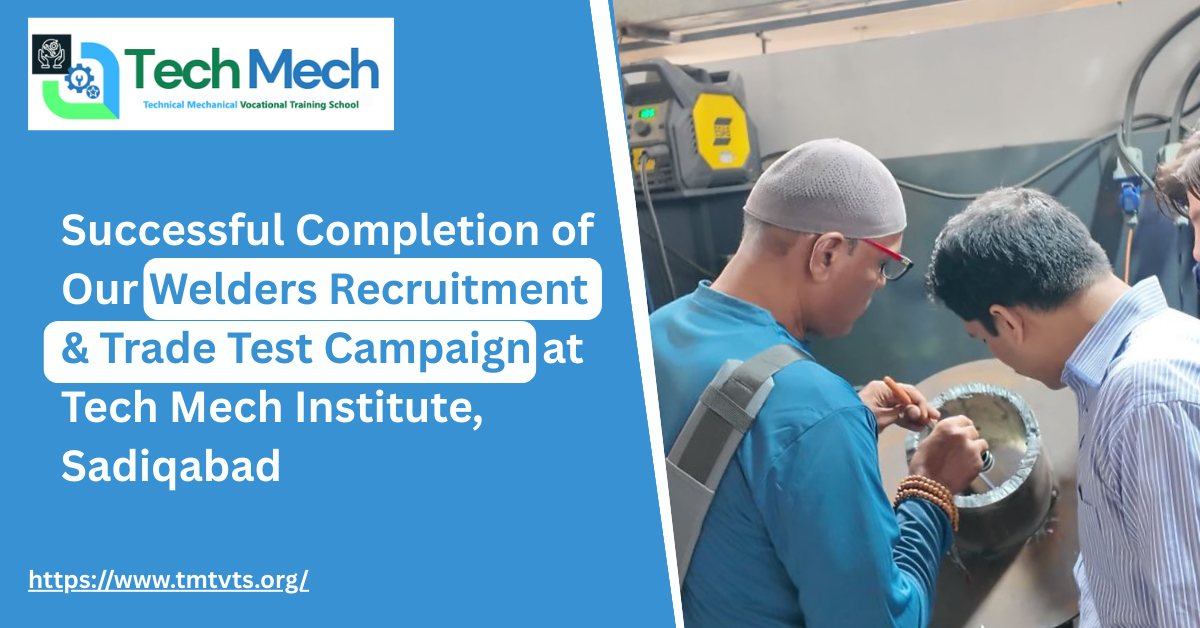
Companies like McDermott, NPCC, Hyundai, JGC test fabricators before selection. Without training, many fail simple tasks, like:
- Reading a drawing
- Marking dimensions
- Cutting accurately
- Identifying materials
Certification boosts confidence and selection chances.
What a Good Fabrication Course Includes
A proper structure & piping fabrication course includes:
Drawing Reading
- Isometric & orthographic views
- Symbols, notes, dimensions
- Material lists
Structure Fabrication
- Beams, channels, angles
- Base plates
- Bracing
- Fabrication fits
Piping Fabrication
- Spools
- Fit-up
- Flange alignment
- Weld preparation
Hands-On Practice
- Grinder
- Cutting machines
- Measuring tools
Safety & Quality Control
- PPE
- Fabrication standards
- Inspection steps
Career Opportunities After Certification
In Pakistan
Salary: PKR 40,000–90,000+ Industries:
- Construction
- Workshops
- Factories
In Gulf Countries
Salary: UAE: 1,200–2,200 AED Saudi: 1,400–2,500 SAR
Job roles:
- Structure fabricator
- Piping fabricator
- Steel erector
- Pipe fitter
Why Choose Tech Mech Technical Vocational Training School
Tech Mech offers:
- 100% practical training
- Industry-recognized certification
- Skilled instructors
- Gulf-standard workshop
- Job assistance
Admissions for 2025 are now open.
FAQ (People Also Ask)
1. Can beginners join this course?
Yes, everything starts from the basics.
2. How long is the course?
1–3 months depending on training level.
3. Will I learn drawing reading?
Yes, it’s a major part of the training.
4. Does certification help in Gulf jobs?
Absolutely. It increases interview and test success.
5. What documents do I need?
You only need:
- CNIC
- Basic education
- Interest in technical work
Want to boost your skills and qualify for Gulf jobs?
If you want to become a skilled structure and piping fabricator with real job potential in Pakistan and the Gulf, now is the best time to enroll.
Contact Tech Mech Technical Vocational Training School today For admissions in welding, pipe fitting, fabricator, and grinder courses including job-oriented training and recruitment support for Gulf countries.
Summary
Becoming a certified structure and piping fabricator is one of the smartest career moves in today’s job market. Whether you’re a beginner or an experienced worker returning from the Gulf, the right training can boost your confidence, skills, and income.
Choosing a reputable institute like Tech Mech Technical Vocational Training School ensures you learn industry-level fabrication with confidence and get the opportunities you deserve in Pakistan and abroad.